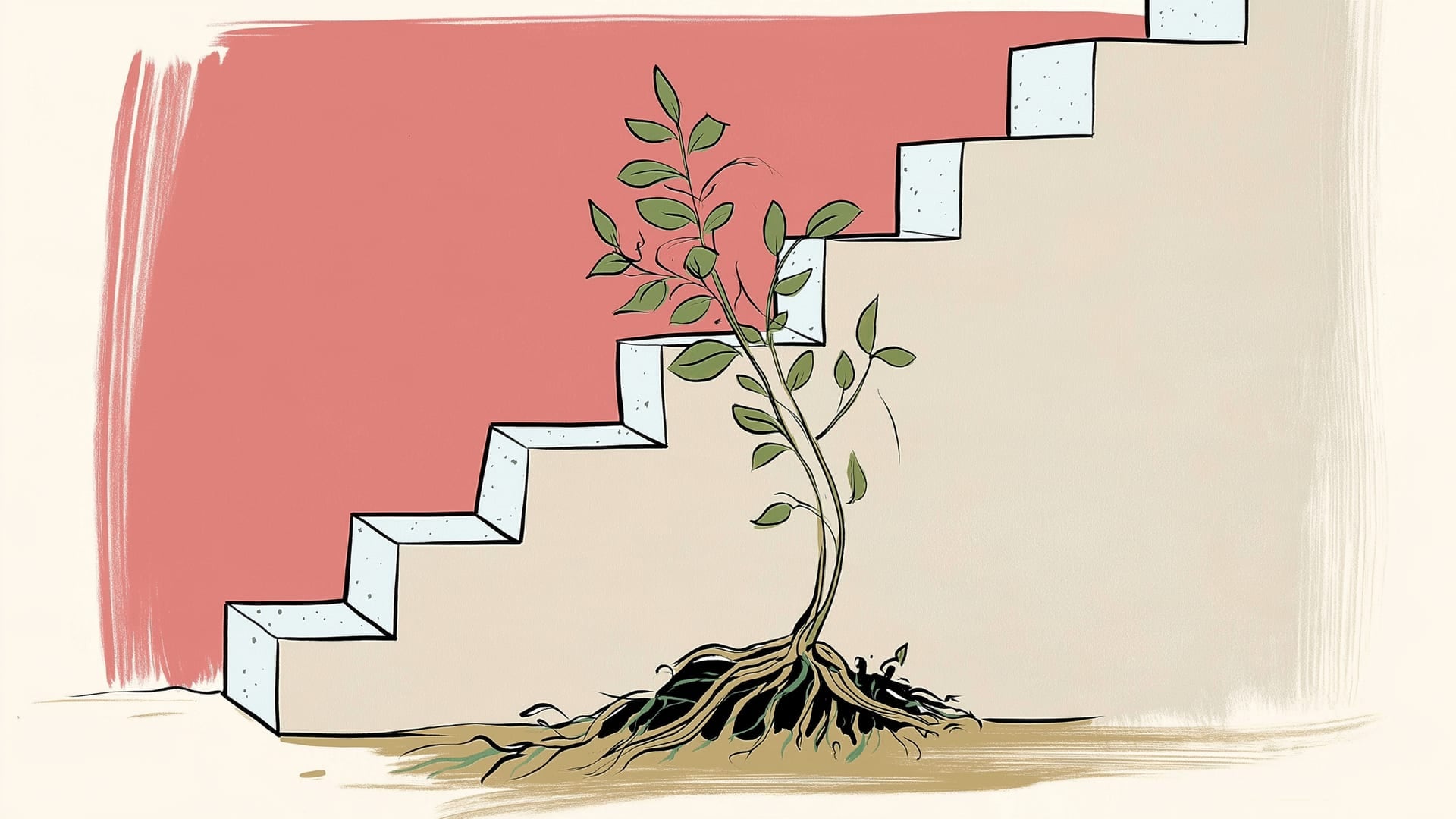

Vygotsky borrowed the terms spontaneous and non-spontaneous from Piaget; however, he included scientific concepts among non-spontaneous concepts and preferred the term everyday concepts to the term spontaneous.
Distinctive characteristics of the two types of concepts
Vygotsky distinguished between spontaneous and non-spontaneous concepts in several ways. The most crucial difference is that spontaneous concepts arise outside a system, while non-spontaneous concepts develop only within a system, where they acquire awareness and deliberateness. “In the acquisition of scientific concepts, the system must be built simultaneously with their development. The concept of system organization thus becomes a crucial one” (Vygotsky, 1986, p. 197).
Vygotsky argued that scientific concepts, by their very nature, presuppose a place in a system of concepts. All scientific concepts are therefore related to each other in one way or another:
[…] the very notion of scientific concept implies a certain position in relation to other concepts, i.e., a place within a system of concepts. It is our contention that the rudiments of systematization first enter the child’s mind by way of his contact with scientific concepts and are then transferred to everyday concepts changing their psychological structure from the top down. (Vygotsky, 1986, pp. 172–173)
The second difference lies in where the concepts come from. Non-spontaneous concepts, including scientific concepts, develop as a child acquires a system of knowledge through instruction, while spontaneous concepts are formed in a child’s practical activity, through direct interaction with other people in everyday life. More on the role of instruction in the development of concepts in late-bilingual students can be found in the article Word as a Tool for Scientific Concept Development.
The third distinction Vygotsky made concerns the different paths the two kinds of concepts follow in their development: “…the development of the child’s spontaneous concepts proceeds upward, and the development of his scientific concepts downward…” (Vygotsky, 1986, p. 193).
The two lines of development are called “bottom to top” and “top to bottom.” Everyday concepts develop from the bottom to the top. They arise when a child encounters real things whose meaning an adult explains to him. Only gradually does the child become able to give a verbal, logical explanation of the relationships behind the everyday concept.
Scientific concept development, Vygotsky concludes, starts with a verbal explanation that is later connected to the child’s experience. The initial verbal definition is the crucial moment in the development of a scientific concept. When this definition is given within a fixed system, it descends to the concrete phenomena that a child meets in everyday life, while everyday concepts develop outside an organized system and gradually rise to the level of generalization and abstraction. Table 1 summarizes the most important features of the two types of concepts.
Table 1. The most important characteristics of spontaneous (everyday) and non-spontaneous (scientific) concepts
| Spontaneous (everyday) concepts | Non-spontaneous (scientific) concepts |
|---|---|
| are never introduced to a child systematically or explicitly connected with other, related concepts | are presented as a system of interrelated ideas |
| originate in everyday life, i.e., the child acquires them outside explicit instruction | originate in classroom instruction, i.e., a teacher introduces them explicitly at school |
| develop from “bottom to top,” from the child’s experience to generalizations and abstractions | develop from “top to bottom,” from a verbal explanation to concrete everyday phenomena |
| provide the basis for the development of scientific concepts | cover the most essential aspects of an area of knowledge and extend the meaning of everyday knowledge |
An example: brother and exploitation
Vygotsky illustrates the difference with experiments carried out by his colleague Zh. I. Shif (Vygotsky, 1986, chapter 6). Schoolchildren were asked to finish sentences that broke off at because or although. Some sentences were about everyday situations, and others were about material from their social studies lessons. Surprisingly, the children finished the sentences about the school material more correctly than the everyday ones.
The everyday concept brother is a good illustration. A child knows perfectly well what a brother is and uses the word correctly in real situations, but he finds it hard to define the word or to reason about it in the abstract, for example, to explain that his brother also has a brother. A concept learned at school, such as Vygotsky’s own example exploitation, starts at the other end: the child can define it and connect it to other concepts, but it is still poor in concrete, personal experience.
| brother (everyday concept) | exploitation (scientific concept) | |
|---|---|---|
| Where it comes from | family life, direct experience | the teacher’s explanation in class |
| What the child can do | use it correctly in real situations | define it and relate it to other concepts |
| What the child finds hard | defining it and using it deliberately, in the abstract | linking it to concrete, everyday experience |
Interrelatedness of the two types of concepts
Besides these differences between scientific and spontaneous concepts, Vygotsky also saw their interrelatedness: their ‘reciprocal dependence’ and constant influence on each other. Both kinds of concepts belong to the semantic side of speech development, and the development of both is crucial for a child’s intellectual growth.
John-Steiner and Mahn (1996) also point out that Vygotsky recognized not only the differences between the two types of concepts but also their interdependence. They cite Vygotsky’s (1986, p. 157) claim that the development of spontaneous and of scientific concepts “are parts of a single process: the development of concept formation which is affected by varying external and internal conditions but is essentially a unitary process, not a conflict of antagonistic, mutually exclusive forms of thinking.” According to John-Steiner et al. (1998), Luria contributed to this question with his concept of ‘interfunctional organization’, which he drew from Vygotsky’s idea of the interrelation between scientific and everyday concepts, and “in which scientific concepts rise on the foundation of everyday concepts and, in the process, fundamentally change the everyday concepts by drawing them into systemic relations” (p. 128).
As the two kinds of concepts follow their paths of development, they meet each other half way and support each other’s development. Vygotsky (1986) noted that “from the very beginning, the child’s scientific and his spontaneous concepts … develop in reverse directions: Starting far apart, they move to meet each other” (p. 192). He continued:
In working its slow way upward, an everyday concept clears a path for the scientific concept and its downward development. It creates a series of structures necessary for the evolution of a concept’s more primitive, elementary aspects, which give it body and vitality. Scientific concepts, in turn, supply structures for the upward development of the child’s spontaneous concepts toward consciousness and deliberate use. (Vygotsky, 1986, p. 194)
The role of spontaneous concepts
Vygotsky raised the question of how scientific concepts originate in the mind of a child. Unlike Piaget, he did not believe that the system, and the awareness that comes with it, enter the child’s concepts from outside and replace the child’s familiar way of thinking. He repeatedly emphasized that both the system and the awareness of scientific concepts require the child to have rather rich and well-developed spontaneous concepts. The initial system that arises in the sphere of scientific concepts then extends structurally to everyday concepts, reorganizing them and transforming their inner nature, as if from the top.
Vygotsky viewed “scientific concepts as the gates through which awareness enters the realm of children’s concepts” (Vygotsky, 2005, p. 213). A. Kozulin’s translation puts it this way: “reflective consciousness comes to the child through the portals of scientific concepts” (Vygotsky, 1986, p. 171).
However, scientific concepts can develop in children only when their spontaneous concepts have reached a certain level of maturity. Only when a child’s spontaneous concepts reach the level typical of early school age is the child cognitively and psychologically ready to begin acquiring scientific concepts. At the same time, scientific concepts, with their higher level of generalization, influence the development of spontaneous concepts and change their structure. Vygotsky thus stressed how important spontaneous concepts are for the development of scientific concepts.
In other words, the development of spontaneous concepts and the development of scientific concepts are intertwined and affect each other. Vygotsky emphasized that concept development is one fused process. In his words, “mastering a higher level in the realm of scientific concepts also raises the level of spontaneous concepts. Once the child has achieved consciousness and control in one kind of concepts, all of the previously formed concepts are reconstructed accordingly” (Vygotsky, 1986, pp. 191–192).
Weaknesses and strengths of the two types of concepts
Vygotsky claims that at different stages of development, the same child shows different strengths and weaknesses in everyday and scientific concepts.
According to Vygotsky’s research, the weakness of everyday concepts is that the child cannot use them in the abstract or at will; in such situations, the child often uses them incorrectly. The weakness of a scientific concept is its verbalism, which Vygotsky saw as the main danger in the development of scientific concepts: it is not yet sufficiently filled with concrete content. The strength of scientific concepts lies in their conscious and deliberate character. Spontaneous concepts, on the contrary, are strong in what concerns the situational and the empirical.
| Strength | Weakness | |
|---|---|---|
| Everyday concepts | rich in concrete, situational experience | hard to use in the abstract, consciously and at will |
| Scientific concepts | conscious, deliberate, part of a system | verbalism: too little concrete content |
We can conclude that concept development is a multidimensional process. Although spontaneous and scientific concepts follow their own paths of development, their interrelatedness and mutual dependence should not be underestimated. How these ideas apply to bilingual children is discussed in Concept Development in Bilinguals: Vygotskian Framework.
Check yourself
The quiz is loading…
References
John-Steiner, V., & Mahn, H. (1996). Sociocultural approaches to learning and development: A Vygotskian framework. Educational Psychologist, 31(3/4), 191–206.
John-Steiner, V., Meehan, T. M., & Mahn, H. (1998). A functional systems approach to cognitive development. Mind, Culture, and Activity, 5(2), 127–134.
Vygotsky, L. S. (1986). Thought and Language (A. Kozulin, Trans.). Cambridge, MA: The MIT Press.
Vygotsky, L. S. (2005). Myshlenie i rech’ [Thought and Speech]. Moscow: Labirint.
Further reading
As an Amazon Associate, Language Avenue earns from qualifying purchases.
- Vygotsky, L. S. (1978). Mind in Society: The Development of Higher Psychological Processes. Cambridge, MA: Harvard University Press. Vygotsky’s most widely read book in English, including the zone of proximal development. Find it on Amazon
- Vygotsky, L. S. (1986). Thought and Language (A. Kozulin, Trans.). Cambridge, MA: MIT Press. The source itself: chapter 6 is about scientific and everyday concepts. Find it on Amazon
- Kozulin, A. (1990). Vygotsky’s Psychology: A Biography of Ideas. Cambridge, MA: Harvard University Press. How Vygotsky’s ideas developed, by the translator of Thought and Language. Find it on Amazon
- Wertsch, J. V. (1985). Vygotsky and the Social Formation of Mind. Cambridge, MA: Harvard University Press. A classic, readable introduction to Vygotsky’s theory. Find it on Amazon
- Bodrova, E., & Leong, D. J. (2007). Tools of the Mind: The Vygotskian Approach to Early Childhood Education (2nd ed.). Upper Saddle River, NJ: Pearson. Vygotsky’s ideas made practical for young children, very popular with teachers. Find it on Amazon