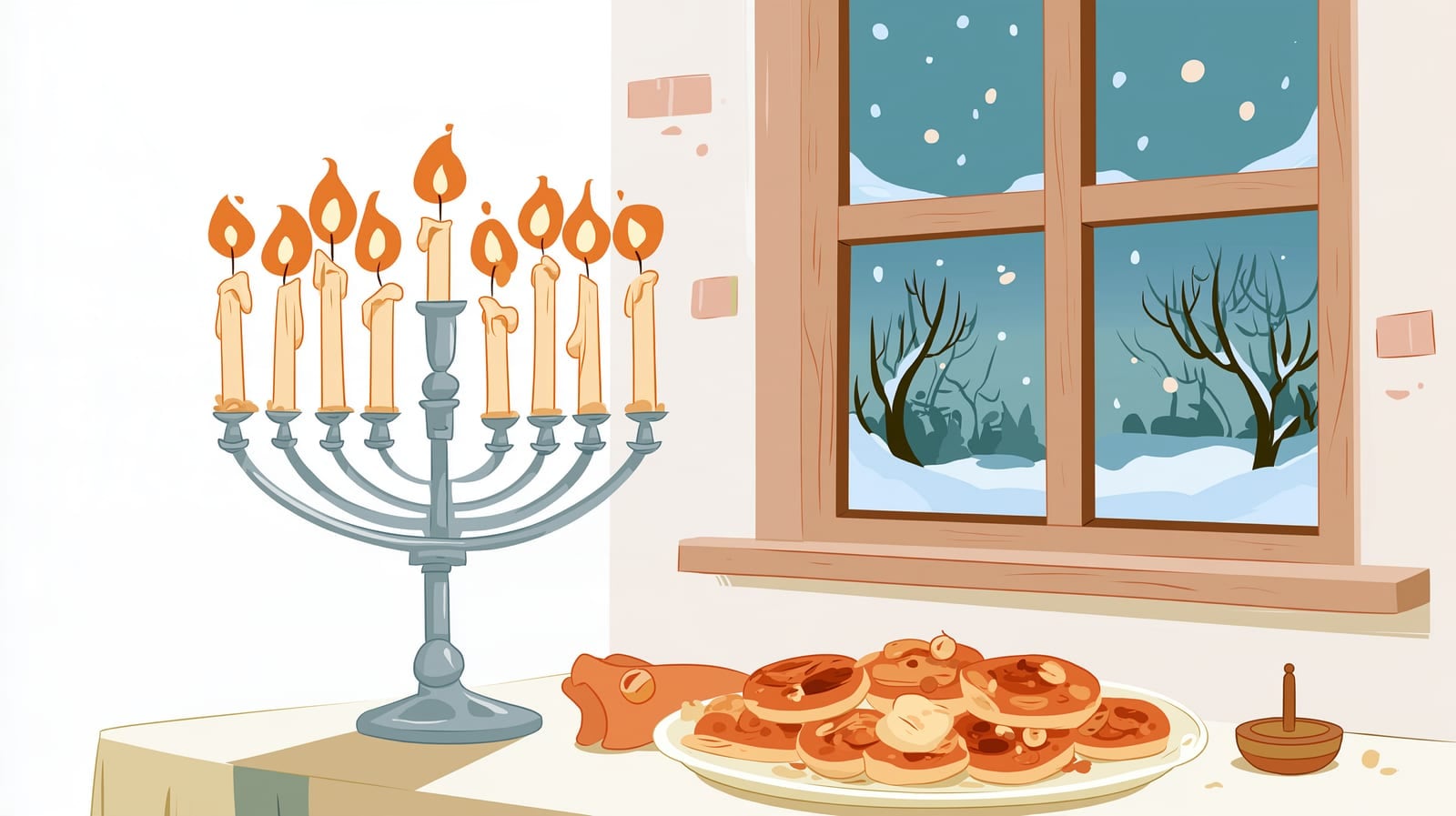
Every winter, Jewish families around the world celebrate Hanukkah, the Festival of Lights. For eight nights, they candles, sing songs, eat special food and play games. But where does this holiday come from?
The story of Hanukkah is more than 2,000 years old. In times, the land of Israel was ruled by a Greek-speaking king, Antiochus IV. He wanted everyone in his kingdom to follow Greek ways. He did not allow the Jewish people to practice their . His soldiers even placed statues of Greek gods in the Holy in Jerusalem, the most important place for the Jews.
A small group of Jewish decided to fight back. They were called the Maccabees, and their leader was Judah Maccabee. The king had a large, strong , and the Maccabees were only a few. But they knew the hills and the roads of their country, and they did not give up. After about three years, they the king’s army and took back Jerusalem.
The Maccabees cleaned the Temple and made it holy again. The word “Hanukkah” means in Hebrew, because the Temple was dedicated to God once more, around the year 164 BCE.
There is also a famous story about the Temple lamp. It needed pure olive to burn, but the Maccabees found only one small jar, enough for just one day. Then a happened: the oil burned for eight days, until new oil was ready. This is why Hanukkah lasts eight nights.
Today, families remember the story with a special candleholder called a (or hanukkiah). It has places for nine candles: one for each night, and one helper candle, the shamash, which is used to light the others. On the first night, families light one candle; on the second night, two; and so on, until all eight burn together on the last night. Many families put the menorah in a window, so people outside can see the light.
Because of the oil in the story, people eat food that is in oil. Latkes are crispy potato pancakes, often eaten with applesauce or sour cream. In Israel, people love sufganiyot, round doughnuts filled with jelly.
Children play with a dreidel, a small top with four sides. They it and win or lose chocolate coins, depending on which side lands on top. The four Hebrew letters on the dreidel stand for the words “A great miracle happened there.” In Israel, the last letter is different, and the words mean “A great miracle happened here.”
Hanukkah follows the Hebrew , so the dates change every year in the international calendar. It usually comes in late November or December. In 2026, Hanukkah begins on the evening of December 4 and ends on December 12.
Hanukkah is not the most important Jewish holiday, but it is one of the best loved. It is a about courage, freedom and hope: even a small light can shine in the dark.
Study the Words
15 new words from the story. Click the speaker to hear each one.
- ancient/ˈeɪnʃənt/very, very old; from a time thousands of years ago
- religion/rɪˈlɪdʒən/a belief in God or gods, and the ways people show it
- temple/ˈtempəl/a building where people go to pray
- rebel/ˈrebəl/a person who fights against the people in power
- army/ˈɑrmi/a big group of soldiers
- to defeat/dɪˈfiːt/to win against someone in a fight or a game
- dedication/ˌdedɪˈkeɪʃən/giving a place or a building to God again, with a special ceremony
- oil/ɔɪl/a thick liquid from olives or other plants, used for cooking or for lamps
- miracle/ˈmɪrəkəl/a wonderful thing that cannot happen in the normal way
- menorah/məˈnɔrə/a candleholder with nine places for candles, used at Hanukkah
- to light/laɪt/to start a fire on a candle or a lamp
- to fry/fraɪ/to cook food in hot oil
- to spin/spɪn/to turn around and around very fast
- calendar/ˈkæləndər/a way of dividing the year into days, weeks and months
- tradition/trəˈdɪʃən/something that people have done in the same way for a long time